The Exception and the Rule
The Exception and the Rule (2006) /digital drawing/550 x 540 cm

The Exception and the Rule (2006) /digital drawing/550 x 540 cm
Venimos del feminismo radical, somos las bolleras, las putas, lxs trans, las inmigrantes, las negras, las heterodisidentes… somos la rabia de la revolución feminista, y queremos enseñar los dientes; salir de los despachos del género y de las políticas correctas, y que nuestro deseo nos guíe siendo políticamente incorrectas, molestando, repensando y resignificando nuestras mutaciones. Ya no nos vale con ser sólo mujeres. El sujeto político del feminismo “mujeres” se nos ha quedado pequeño, es excluyente por sí mismo, se deja fuera a las bolleras, a lxs trans, a las putas, a las del velo, a las que ganan poco y no van a la uni, a las que gritan, a las sin papeles, a la marikas…
LGBT Activism and Europeanisation in the Post-Yugoslav Space, Bojan Bilić (ed.) >> Andar Erótico Decolonial, Raúl Monarquech Ferrera-Balanquet (ed.) >> Politika, estetika in demokracija, Marina Gržinić (ed.) >> Decolonizing Sexualities: Transnational Perspectives, Critical Interventions, Sandeep Bakshi, Suhraiya Jivraj, Silvia Posocco (ed.) >>…
New Keywords: Migration and Borders >> La esperanza del monstruo democrático, entre Syriza y Podemos, Antonio Negri, Raúl Sánchez Cedillo >> Catalunya Trans, Paul B.Preciado >> Decolonization is not a metaphor, Eve Tuck, K. Wayne Yang >> Decolonizing the Transgender…
The Johannesburg Salon, Volume 9 >> Signal #1 >> The Johannesburg Salon, Volume 8 >> TSQ: Transgender Studies Quarterly, Volume 1, Issue 3 >> The Johannesburg Salon, Volume 7 >> e-misférica 11.1: Decolonial Gesture >> Journal Crisis and Critique, Crisis…
Decolonial Struggles and Performative Interventions into Western Politics, interview with Marissa Lôbo >> “Artist-proletarians” are everywhere, interview with Dmitry Vilensky (Chto delat?) >> Post-Soviet Imaginary and Global Coloniality: a Gendered Perspective, interview with Madina Tlostanova >> Mi sexualidad es una…
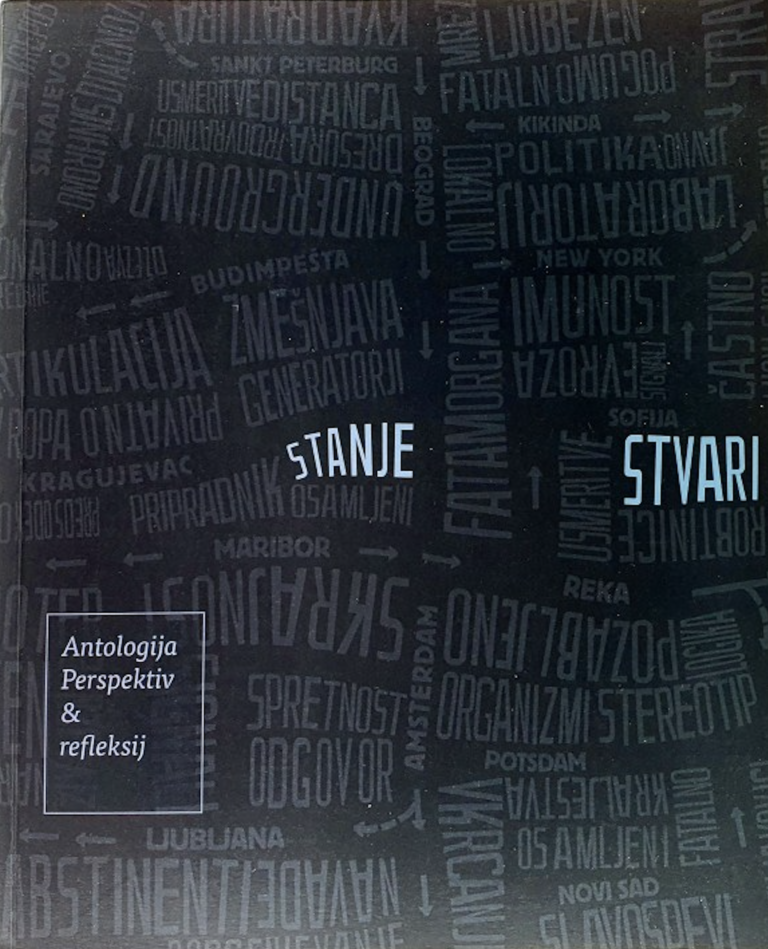
Danes smo ujeti v novo fazo kapitalizma, ki ji pravimo postpolitična; v njej je politika, kot piše Lopez Petit, dobila najbolj arhaične oblike; izključevanje (družbena smrt), izsiljevanje in ropanje (ekonomska kriza in protikrizni ukrepi) ter vojna; – ali farmakopornografska, kot jo poimenuje Preciado, referirajoč se na procese biomolekularne (farmako) in semio-tehnične (porno) nadvlade subjektivitete. Akumulacijo prek razlastitve, de-kompozicijo družbe, de-valorizacijo (ne še popolno) državnih institucij, eksplozijo neenakosti, prekernosti … hkrati spremlja artikulacija novih oblik nadzora subjektivitete s pomočjo tehničnih, biomolekularnih in medijskih platform v “nekdanjem” prvem kapitalističnem svetu in posledično, prek novih oblik kolonizacije, v vseh ostalih svetovih. Na delu je tehno-družbeni-ekonomski megasistem, ki neustavljivo teži k neskončni akumulaciji kapitala, kontroli subjektivitete, nevtralizira in absorbira kakršenkoli subverziven potencial politične akcije in v končni depolitizira vsako politično intervencijo. Prav ta biopolitični ekonomski obrat ter identifikacija kapitalizma z realnostjo pomeni, da je samo življenje postalo polje političnega boja.
The title of this dossier honors the social activism and political philosophy of the coalitional project of decolonial feminisms. While those involved in this conversation have for the most part been located in geographical spaces regularly referred to as the United States and Latin America (particularly Bolivia and Mexico), the central question that motivates our solidarity—what does it mean, as Laura Pérez writes in her essay here, “to engage in decolonizing coalitions that take feminist queer of color critical thought seriously as central to the work of decolonization?”—is one that is necessarily posed between and beyond these reified time-spaces. The contributions to feminist thinking made in this dossier by scholar-activists working in and across the contexts of Bolivia, the United States, Korea, Japan, India, and France can perhaps best be understood as moving between the “post” and the “de” colonial; beyond the reification of our globe toward a version of what Gayatri Spivak has named planetarity.1
kronotop.org /video-interviews >> Transfeminist audivisual archive >> 15Mbcn.tv /la subcomisión de audiovisuales de acampadaBCN >> Decoloniality Europe – audiovisual resources >> Roma Media Archive >> Archivo OVNI >> Ubu Web >>